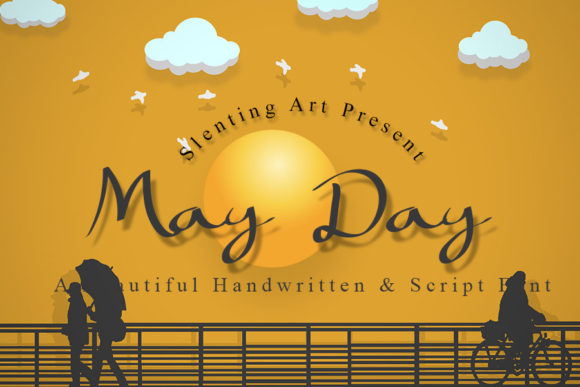
May Day Font: Elegant Script for Business Branding
As a small business owner, I've learned that the right font can transform how a brand is perceived. It's not just about aesthetics—it's about creating a visual language that speaks to customers. Recently, I had the chance to test May Day, a delicate and elegant handwritten font from the Script Amp collection, and it quickly became a go-to for my branding projects.
A Real Business Moment: Refreshing Product Labels
I was working on updating labels for a small candle company. Their previous design felt a bit generic, and they wanted something that felt more personal and refined. May Day fit perfectly. Its soft curves and balanced letters added a touch of sophistication without being too formal. The font’s natural flow made it ideal for product names and scent descriptions, giving the labels a handmade, artisanal feel that resonated with their brand identity.
What stood out was how well May Day performed in small text. Even when used on tiny label spaces, the font remained legible and stylish. It wasn’t just about looking good—it was about making the brand feel trustworthy and consistent across all touchpoints.
The Style and Personality of May Day
May Day has a distinct personality. It feels warm and approachable, like a friendly note from a trusted friend. The script is slightly irregular, which gives it a human touch, but it’s still polished enough for professional use. This balance makes it versatile for both casual and high-end brands.
Its visual character is best described as graceful and modern. The letterforms are well-proportioned, with subtle variations that add character without overwhelming the reader. Whether used for headlines or short phrases, May Day adds a sense of elegance that elevates any design.
Practical Uses for May Day in Business Design
I’ve used May Day in a variety of business materials. For a local bakery, it worked wonders on packaging boxes and menu headers. The font’s flowing style gave the bakery’s branding a fresh, inviting look that felt both professional and welcoming. On a café menu, it helped create a cohesive design that felt part of a larger brand story.
For an online shop, May Day was perfect for banners and social media graphics. It brought a sense of movement and energy that matched the brand’s creative vibe. When paired with a clean sans serif font, it created a nice contrast that made the design feel dynamic yet readable.
Even on thank-you cards, May Day added a personal touch. It felt like a handwritten message, which is exactly what the brand wanted to convey to its customers.
Typography Matters: First Impressions and Brand Perception
Typography plays a huge role in how a brand is perceived. A well-chosen font can make a business look more professional, consistent, and memorable. May Day does this by adding a layer of thoughtfulness to every design it appears in.
Readability is key, especially for small labels or mobile screens. May Day handles these situations well, maintaining clarity even at smaller sizes. It’s also great for printed packaging, where a clean, readable font can make a big difference in customer experience.
When used in digital ads or social media thumbnails, May Day adds a unique flair that stands out without being distracting. It helps a brand be noticed and remembered, which is essential in today’s crowded market.
Font Pairing and Design Tips
May Day pairs well with other fonts that complement its style. For a modern look, try pairing it with a clean sans serif like Montserrat or Lato. For a more traditional feel, a classic serif like Georgia or Playfair Display works well. If you're going for a more whimsical or artistic feel, another script font like Great Vibes or Dancing Script can add depth to your design.
When using May Day, keep in mind that it’s best suited for headlines, logos, and short phrases. It’s not ideal for long blocks of text, but as a decorative or display font, it shines. Use it to highlight key messages or add a personal touch to your branding materials.
Before using May Day on products or client work, check the included styles, file formats, and licensing terms. Make sure it meets your needs for commercial use, multilingual support, and design flexibility.